sexta-feira, 26 de outubro de 2012

Präsident Monson: "Deutschland, ich liebe dich!"


PRESSEMITTEILUNG —  21. OKTOBER 2012
FRANKFURT AM MAIN — 
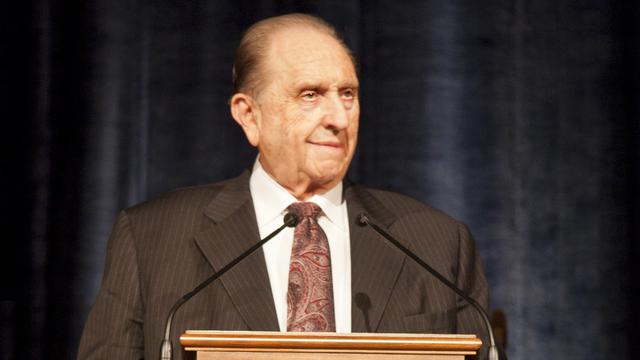
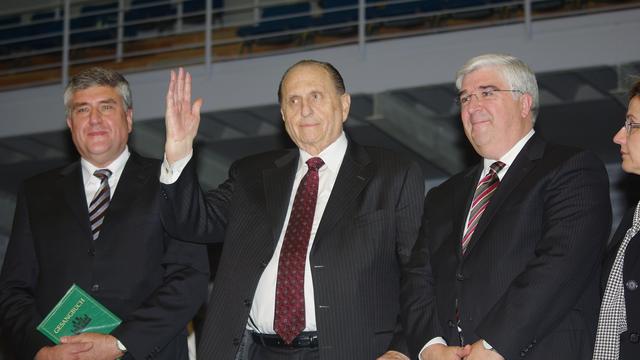
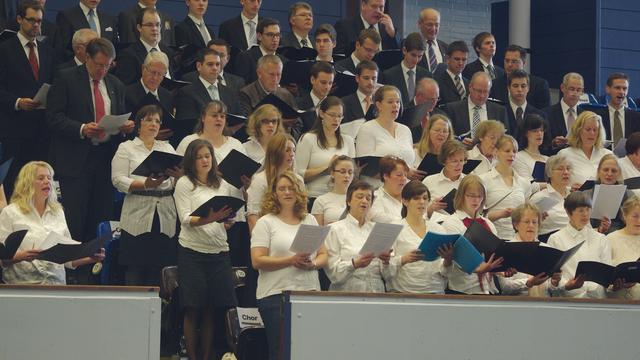
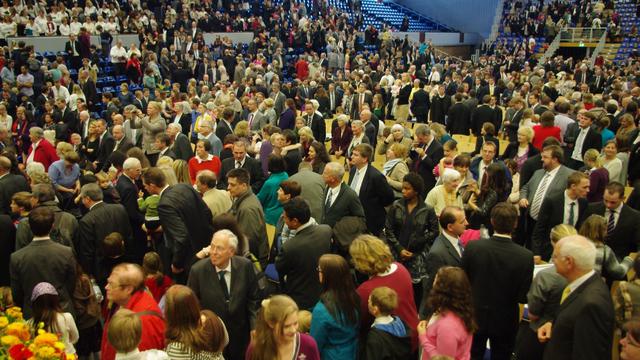
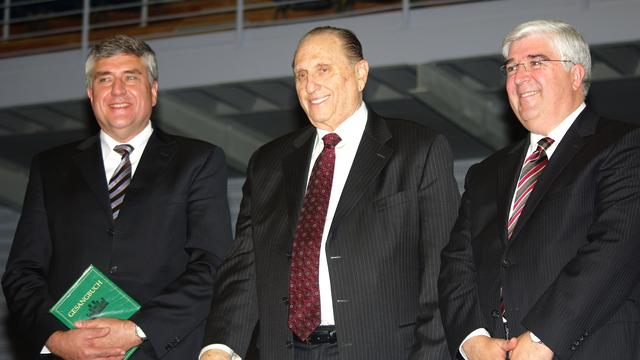
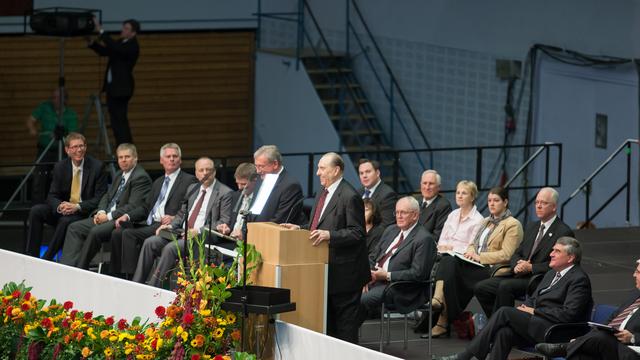
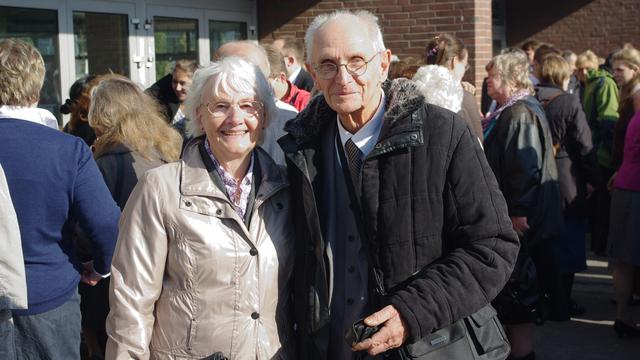
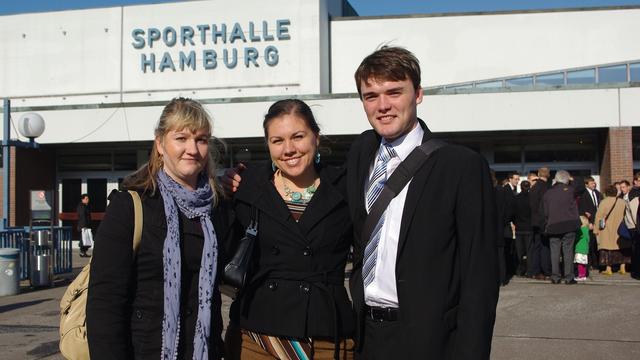
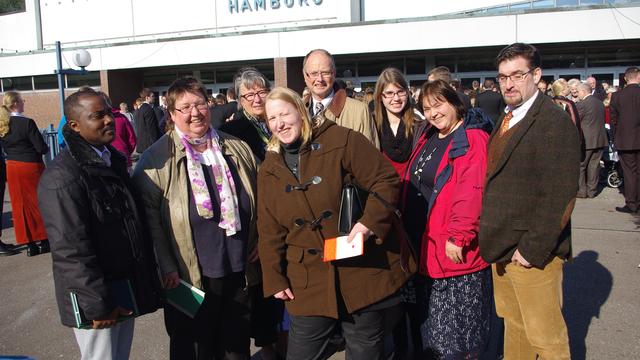
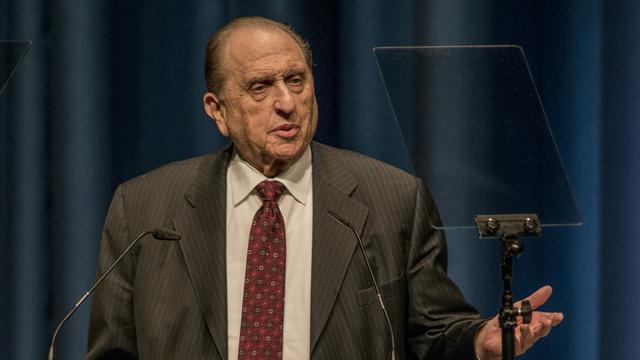
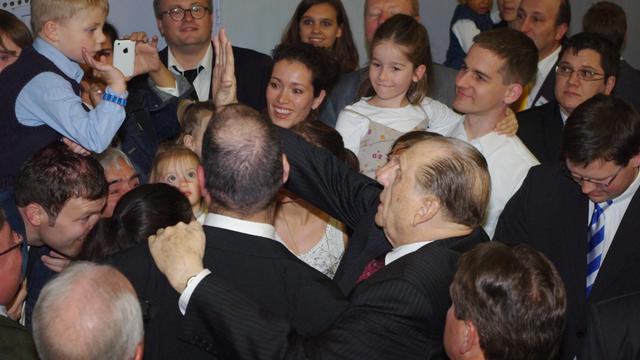
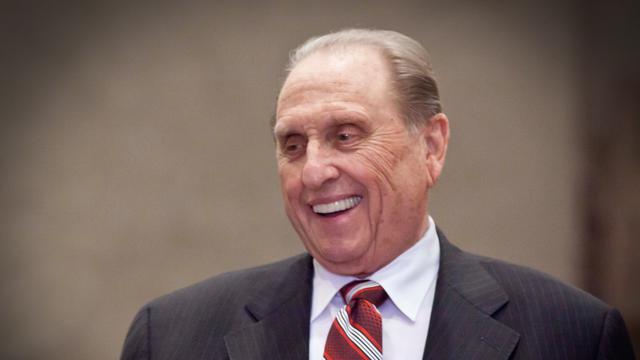
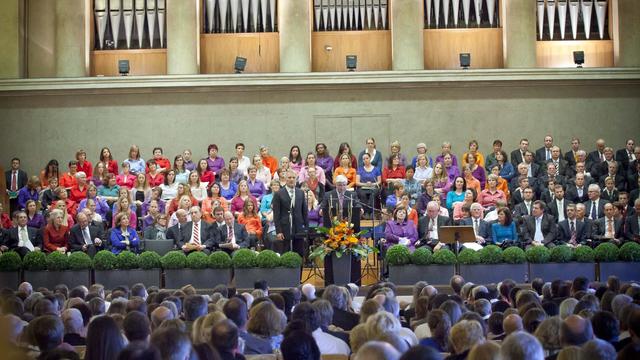
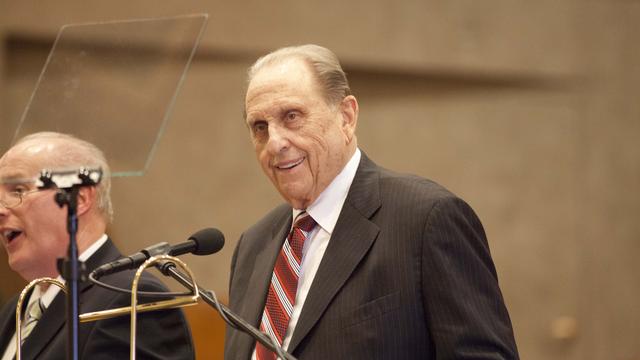
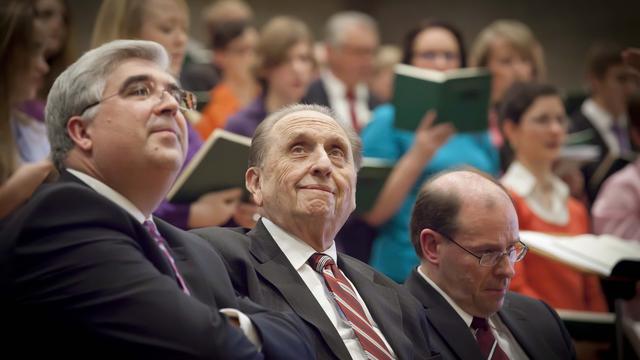
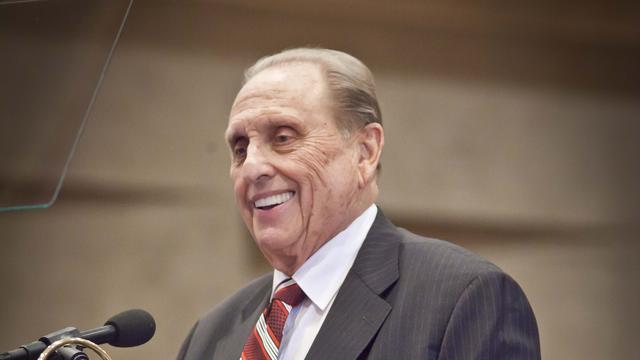
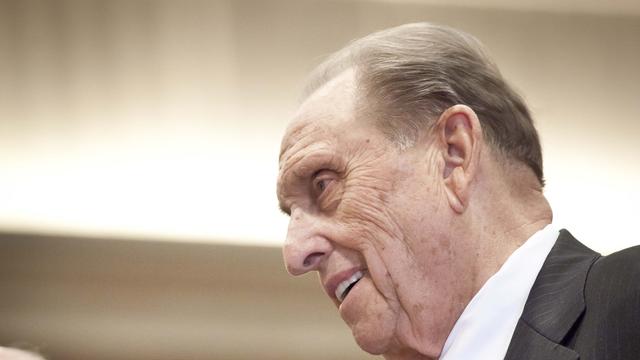
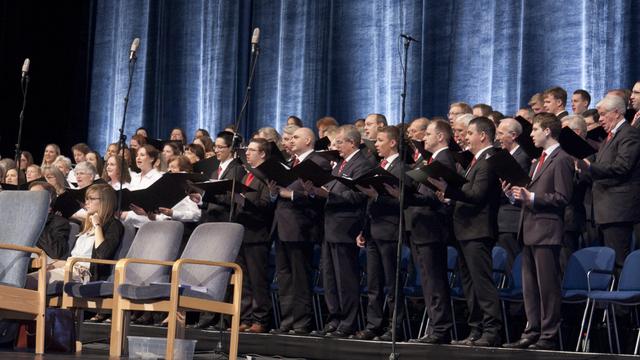
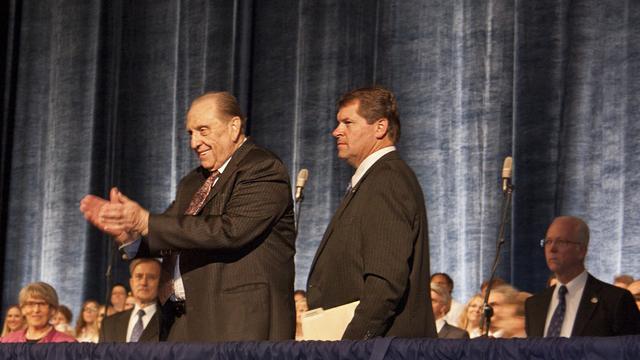
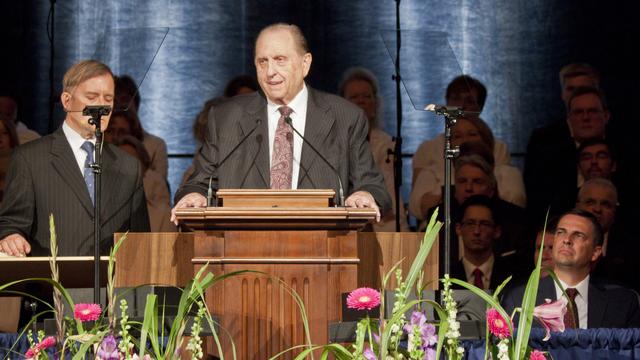
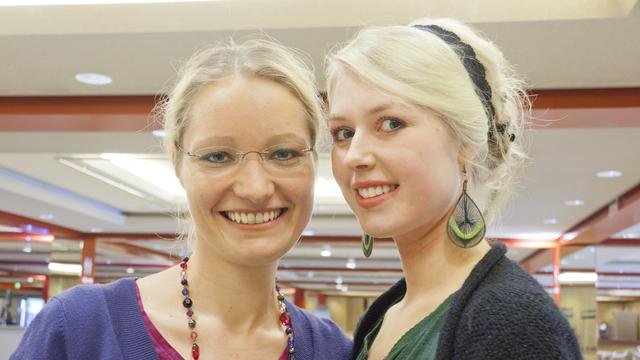
“Deutschland, ich liebe dich!” rief Präsident Thomas S. Monson lächelnd Mitgliedern der Kirche Jesu Christi der Heiligen der Letzten Tage in Hamburg zum Abschluss der ersten von vier Versammlungen im Rahmen eines Deutschlandsbesuchs zu. Der weltweite Präsident der Kirche traf sich im Oktober 2012 mit Gläubigen in Hamburg, Berlin, München und Frankfurt am Main.
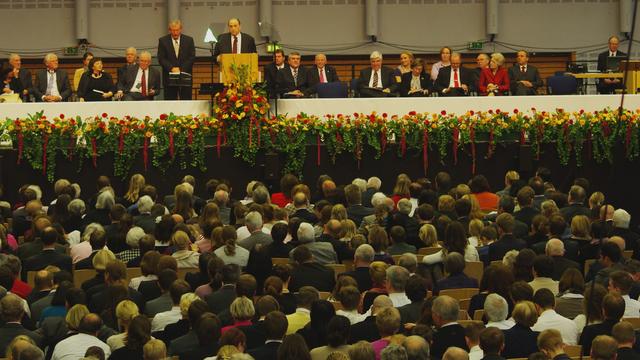
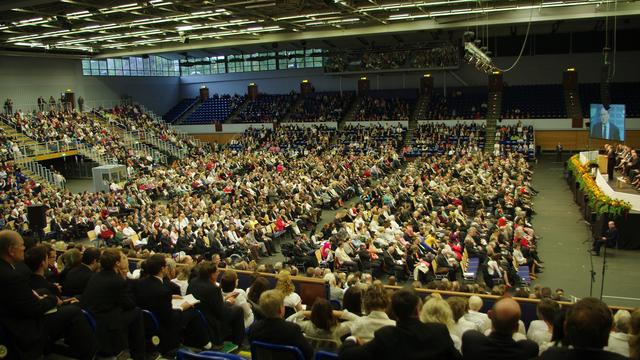
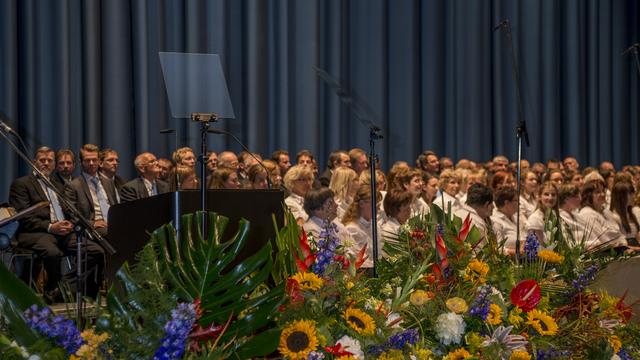
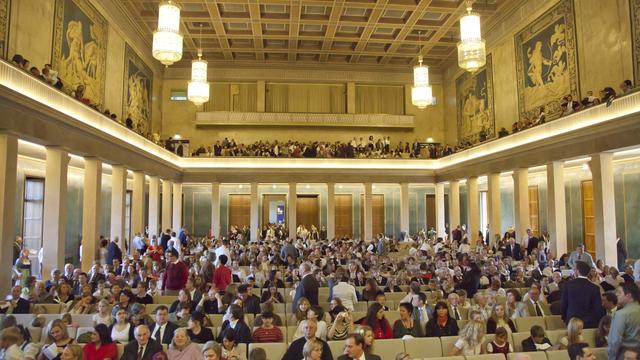
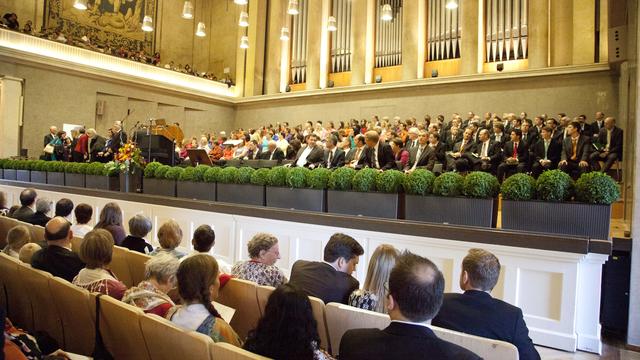
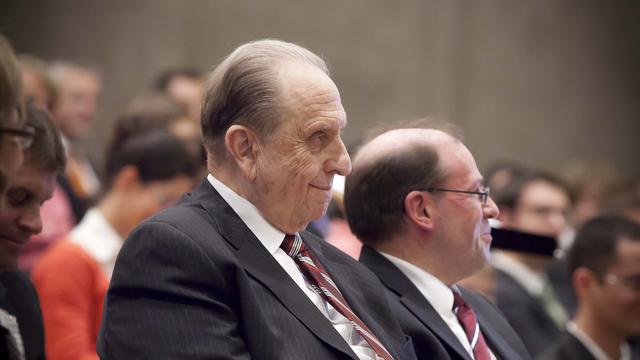
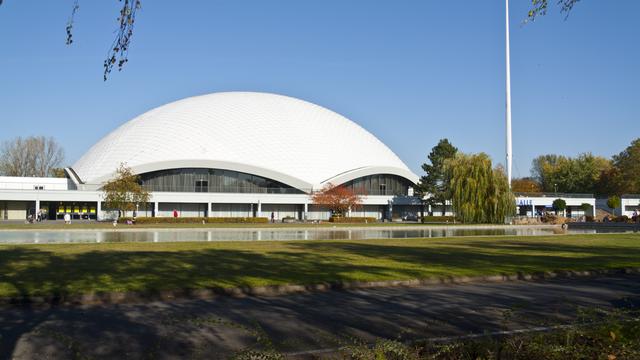
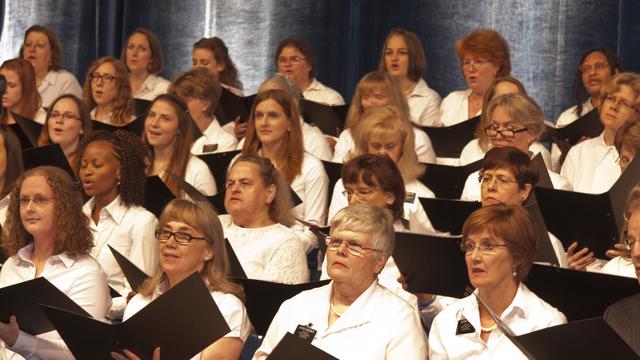
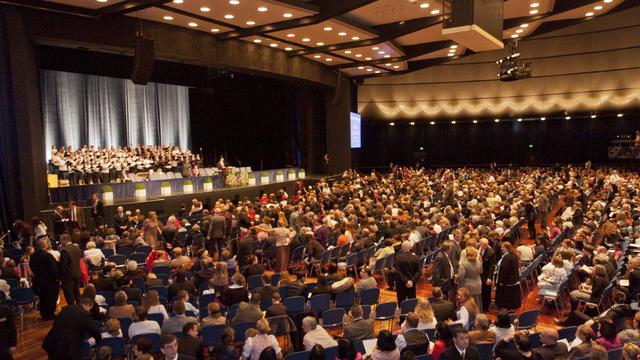
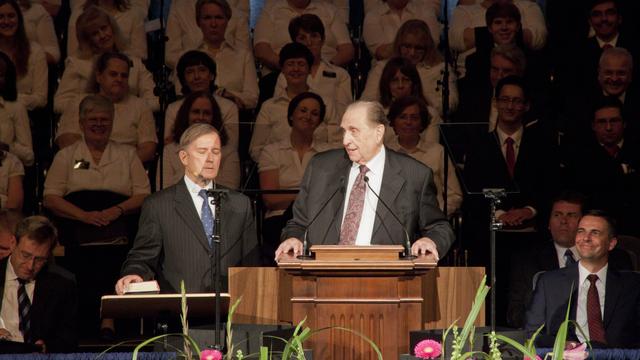
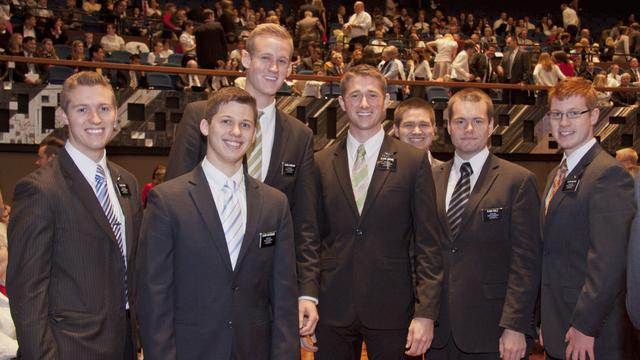
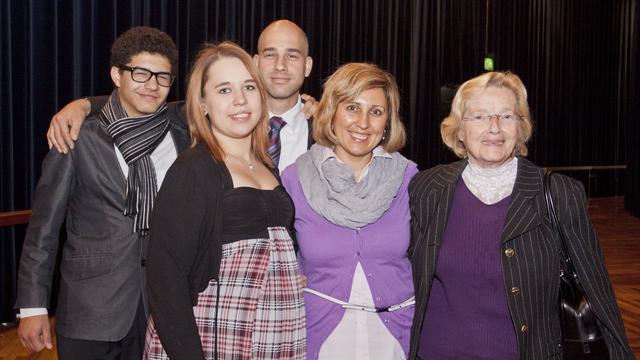
"Viele Wochen lang habe ich gespannt diesen Besuch bei Land und Leuten herbeigesehnt, die ich innig liebe", bekannte Präsident Monson in der Frankfurter Jahrhunderthalle am 21. Oktober während der letzten Zusammenkunft. Diese wurde in Gemeindehäuser der Kirche in Deutschland, Österreich und der Schweiz übertragen. Insgesamt hatten sich an den vier Veranstaltungsorten über 10.000 Heilige der Letzten Tage versammelt, tausende weitere nahmen an der Satellitenübertragung teil.

Im Mittelpunkt seiner Botschaften an deutsche Mitglieder der Kirche stand die Einladung, Jesus Christus nachzufolgen. "Mein Gebet lautet heute: Mögen wir lauschende Ohren haben, damit wir Ihn wiederum hören, wenn er anklopft, damit wir die Einladung des Herrn schätzen und die Weisheit besitzen, den Torweg zu unserem Herzen sowie die Pforte zu unserem Sinn weit zu öffnen, sodass Jesus Christus bei uns einkehren kann", sagte Präsident Monson in Hamburg.

Diejenigen, die den Einfluss des Erretters verspüren, erfahren einen Wandel in ihrem Leben und fühlen den Wunsch, anderen zu dienen, erklärte er in Berlin. Präsident Monson erinnerte die Versammelten in München, dass Jesus Fischern gebot, ihre Netze liegen zu lassen, und verkündete, er werden sie zu Menschenfischern machen. Alle Nachfolger Christi könnten Menschenfischer sein, sagte er. Den Gläubigen in Frankfurt am Main erläuterte er, Jesus habe durch sein Vorbild gelehrt. Er habe Vergebung gelehrt, indem er vergab, und Barmherzigkeit, indem er barmherzig war, ergänzte Präsident Monson.
Präsident Monsons besondere Beziehung zu Deutschland reicht mehrere Jahrzehnte zurück.
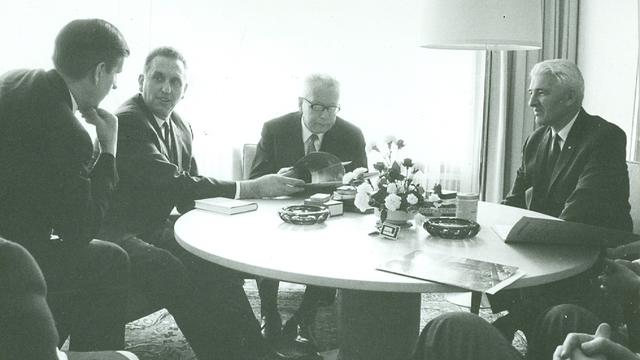
An einem kalten Novembertag im Jahr 1968 traf er sich mit Mitgliedern der Kirche in einem heruntergekommenen Lagerhaus in Görlitz. Deren Glaube rührte ihn und er sprach eine gefühlsgeladene Vorausage aus, die sein Wirken in Europa nachhaltig prägte: "Wenn Sie den Geboten Gottes treu bleiben, wird jede Segnung, deren sich die Kirchenmitglieder in anderen Ländern erfreuen, auch die Ihre sein", verhieß Präsident Monson.
Ein anderes denkwürdiges Ereignis für Präsident Monson war die Weihung der früheren DDR für die Entfaltung des Evangeliums Jesu Christi. Am frühen Morgen des 27. April 1975 auf einem Hügel nahe Dresden ein Weihegebet. Er brachte Dankbarkeit für die Kirche im Land zum Ausdruck, beschrieb den Glauben der Mitglieder und flehte für die Gläubigen, damit sie einen Tempel besuchen könnten, ein besonderes Heiligtum für Heilige der Letzten Tage. Damals befand sich der am nähesten gelegene Tempel in der Schweiz, auf der anderen Seite des Eisernen Vorhangs.
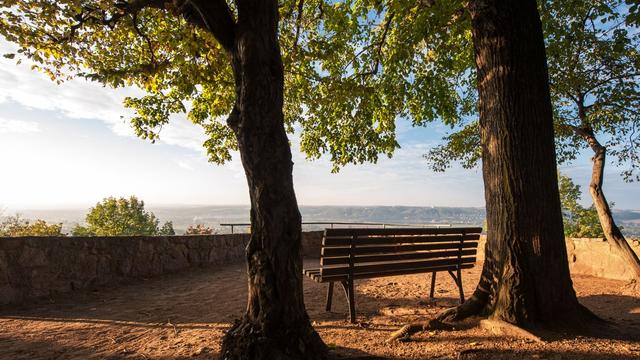
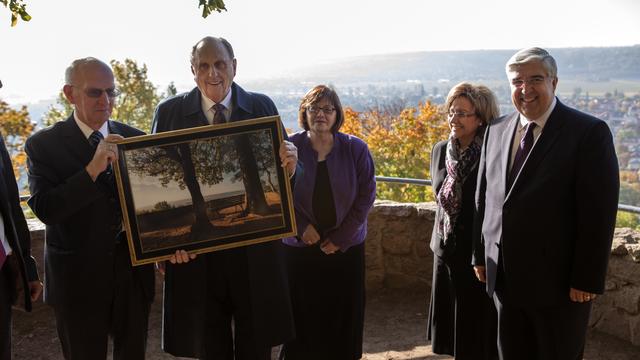
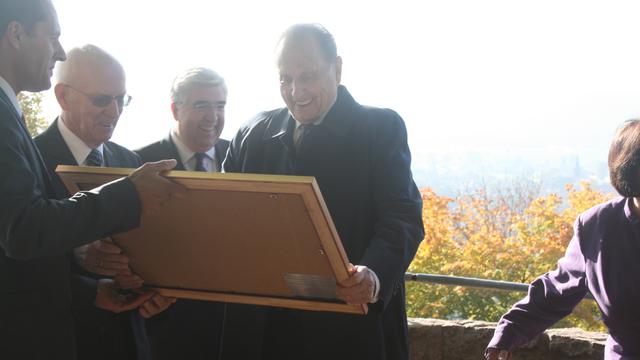
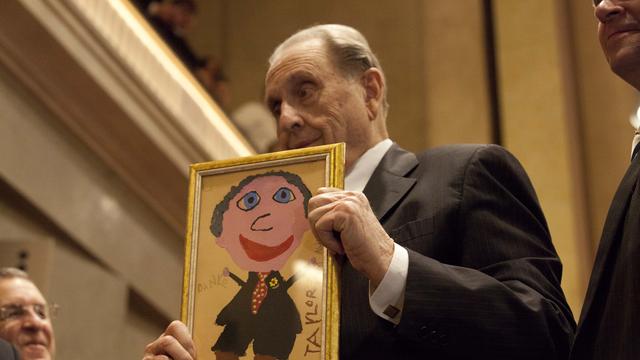
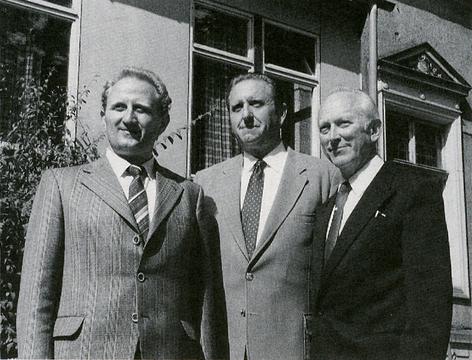
Während seiner Deutschlandreise im Jahr 2012 traf sich Präsident Monson mit alten Freunden und Weggefährten in Sachsen. Er kehrte auch nach Dresden zurück, wo ihm Elder José A. Teixeira, Präsident des Gebietes Europa der Kirche, eine gerahmte Fotoaufnahme des genauen Ortes der Weihung mit Blick auf die Elbe überreichte.
"Wenn Präsident Monson Deutschland besucht, wird uns allen bewusst und wir können bezeugen, dass sich eine prophetische Voraussage erfüllt hat. Was für ein wunderbarer Segen war es doch für uns alle, ihn hier unter uns zu haben und als Gast in Hamburg, Berlin, München und Frankfurt zu empfangen. Es ist offenkundig, dass Präsident Monson für die Deutschen eine tief empfundene Zuneigung hegt und dass diese Liebe von den Menschen in Deutschland erwidert wird", sagte Elder Teixeira.
Präsident Monsons historische Erklärung in Görlitz stellte sich als prophetisch heraus.
Am 29. Juni 1985 wurde der Tempel in Freiberg geweiht, der erste Tempel der Kirche Jesu Christi der Heiligen der Letzten Tage auf deutschem Boden. Und noch vor dem Fall der Berliner Mauer durften ausländische Missionare in die DDR einreisen und Missionare aus dem Inland erhielten die Genehmigung, Missionen im Ausland zu absolvieren.
Zwei Jahre nach der Weihnung des Freiberger Tempels wurde ein Tempel im hessischen Friedrichsdorfgeweiht. Heute zählt die Kirche Jesu Christi der Heiligen der Letzten Tage fast 38.700 Mitglieder und unterhält 174 Gemeinden.
Hinweis an Journalisten: Bitte verwenden Sie bei der Berichterstattung über die Kirche Jesu Christi der Heiligen der Letzten Tage bei deren ersten Nennung den vollständigen Namen der Kirche. Weitere Informationen hierzu im Bereich Name der Kirche.

segunda-feira, 22 de outubro de 2012

Obama vs Romney on foreign policy: Which one is which again?


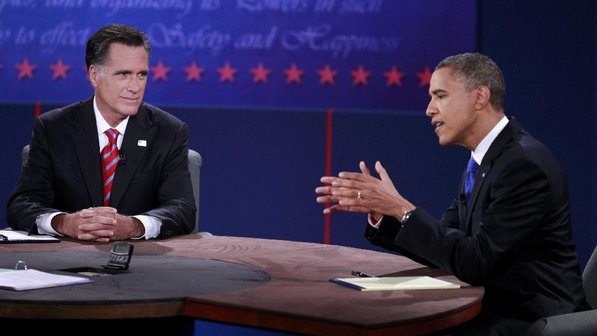
US President Barack Obama and Republican Presidential candidate Mitt Romney participate in the second presidential debate at Hofstra University in Hempstead, New York.(AFP Photo / Emmanuel Dunand)
President Barack Obama and challenger Mitt Romney are neck-and-neck in the polls on the eve of the last debate. When the questions turn to foreign policy, though, will either candidate be able to prove they’re a real alternative to the other?
During Monday evening’s final face-off between the two major-party candidates, questions will be composed of international issues relating directly to America’s foreign policies. Polling stats aside, though, neither candidate can quite claim to have an edge over the other when it comes to calling shots overseas. Both the incumbent and his Republican Party challenger will attempt to discredit the other’s stance on certain foreign powers before a crowd in Boca Raton, Florida Monday night, but in actuality neither can claim they offer any sort of opinion much more different than their opponent.
On the issue of Iran and its rumored plan to procure nuclear weapons, Gov. Romney has repeatedly attacked the Obama administration for their alleged lack of aggression in pursing an end to any Iranian endeavors that would jeopardize the security of the Middle East, particularly America’s time-tested allies the Israelis. In recent weeks, the Romney angle has been to undermine the president’s attempts at negotiations — or lack thereof — labeling the current presidency as one that has done nothing but allow Iran to escalate its nuclear program.
Obama "could have gotten crippling sanctions against Iran," but failed to do so thus far during his presidency, Romney remarked earlier this year.
On Monday, Romney advisor Dan Senor told NBC News of the challenger that, “I think a lot of Americans would probably agree he’d be the better guy to be at the negotiating table on behalf of the United States than President Obama, given that we are four years closer today to Iran getting a nuclear weapon than we were when President Obama took over.”
Romney, Senor said, “will not rule out” any tools that could be used to persuade Iran to finally come to the table with America and negotiate over their nuclear program. But while Pres. Obama has also acknowledged that he has not said no to using any degree of action overseas to push Iran towards relinquishing any nukes, the White House has in fact informed the United Nations that a military maneuver to reinforce the increasingly crippling sanctions imposed on Iran could very well be necessary — the same stance Gov. Romney wants to use to differentiate himself from his challenger.
In terms of the Arab Spring, again both candidates have attempted to distance themselves from their opponent’s ideas regarding the wave of anti-government protests toppling long-time rulers overseas, but on paper their politics offers no drastic differences.
Gov. Romney’s campaign agenda has adamantly involved attacking Pres. Obama’s allegedly soft approach in handling the uprising in Libya, where the GOP opponent says he wouldn’t have taken the president’s strategy of“leading from behind.” On the contrary, Pres. Obama has celebrated his administration’s tactics in aiding the uprising, whereas the US assisted rebel forces were able to top Libya leader Muammar Gaddafi while never once relying on American boots on the ground.
But while disagreeing on the tactics, both candidates never questioned American involvement in the bloody Libyan civil war itself. The fact that a foreign super-power decided to take a side in a conflict dividing Libya by tribal, racial and sectarian lines never troubled neither of the candidates. Documented multiple atrocities committed by the rebels are still taboo in public statements, divisions between rivaling militias fighting for control over land and resources are being overlooked and close ties of some "freedom fighters" with al-Qaeda had to become a topic of public foreign policy discussions only after the murder of the American ambassador to Libya in Benghazi.
Yet again, the topic of the Syrian uprising will certainly be brought up by either candidate during the final presidential debate, although both Pres. Obama and Gov. Romney have remained largely silent on the subject thus far. Again, the more hawkish Romney has made it relatively clear that his administration would ensure a more hardcore, hands-on approach to assisting anti-government rebels in that Arab nation, although he has in actuality done little to explain how he’d accomplish as much or where he’d draw the line. What he has done, however, has picked apart Pres. Obama’s efforts, again lampooning his attempts at intervention as “leading from behind.”

As in many cases, though, the comparable inept Gov. Romney is allowed leeway in attacking the president’s foreign policy because he lacks any personal examples that could allow the incumbent to fire back.
"Obama has a record, and Romney doesn't, so he can just cherry-pick the arguments," Jon Alterman, a former State Department policy planner now at the Center for Strategic and International Studies, tells Reuters. "But that doesn't mean any of it will stick."
It’s clear that the Obama White House has already assisted Syrian rebels with money and non-lethal ammunition under the alleged plan to oust the country’s leader, Bashar al-Assad. Pres. Obama has previously claimed that Assad“lost all legitimacy with his people and the international community” and has endorsed the anti-government revolution taking place, but as of late America’s support has been hardly celebrated as it becomes increasingly clear that the assistance being sent overseas is more likely to fall into the hands of dangerous jihadists than the American-aligned rebels that would be more apt to comply with Mr. Obama’s pleads.
Despite these attempts, the Romney campaign has called out the White House for failing to follow through with aiding the uprising, even though their intentions are being considered loud and clear. Although the Obama administration has indeed endorsed rebel forces in Syria and elsewhere, Deputy National Security Advisor Benjamin Rhodes tells the New York Times, “we made it clear that it is not our place to dictate the outcomes in any given country.”
On the part of the Republican Party, Romney adviser Eliot Cohen tells the paper, “If you don’t even try to shape events, then for sure you are going to get a bad outcome.”
When Monday’s debate turns to the topic to China as expected, both candidates will once again attempt to label their opponent as misinformed and ill-prepared on issues relating to America’s Far East rival. Although both Pres. Obama and Gov. Romney vow to be tough on China to keep any more American jobs from going overseas, neither candidate is likely to actually introduce any program that could provide for as much.
High levels of unemployment in the US will force both Gov. Romney and Pres. Obama to address the deindustrialization of the United States and the subsequent shipping of jobs overseas, and both candidates are certain to say that they each have their ideas for keeping America’s economy afloat. And while Romney will attempt to label China a currency manipulator and attack Obama’s reluctance to sanction exports from Asia, the president is expected to yet again link his opponent’s interests with Chinese businesses, once more making both candidates essentially one in the same. While Romney has gone after the current president for allegedly not being tough enough on China, again the challenger has not confirmed exactly how he would offer any suggestions that would separate his own administration from the Obama White House.
“The fierce presidential race seems to have morphed into a contest in which the one who plays tougher on China has better chances to win,” Xinhua News Agency addressed in a recent commentary piece.
The results of a NBC News/Wall Street Journal poll released over the weekend put both Pres. Obama and Gov. Romney at identical placement among the American public, with a similar survey release days earlier by CNN/ORC International favoring the GOP challenger by a single percentage point. According to a Quinnipiac University/CBS News poll published Monday, the president could be as much as five points ahead of his opponent.

Breaking Down the Mormon SEO Strategy


Last week while I was at lunch, I came across this submission on Hacker News about how Avinash discussed the effectiveness of The Church of Jesus Christ of Latter-day Saints‘ SEO practices.
LDS Keyword Tag Cloud
A tag cloud very quickly shows the story in hundreds of thousands of keywords. In the case above, The Church of Jesus Christ of Latter-day Saints, it becomes quickly apparent that the Mormon Church has done a near magnificent job with search. – Avinash
As an SEO, I was naturally interested in their strategy, so I looked deeper. What I found was extremely interesting and a great case study of the power of SEO (and how to do it well).
[All data in examples below was taken from competitive intelligence tools as I don't have access to data for LDS sites.]

Traffic Acquisition

One of the valuable benefits of organic search marketing is targeting searchers who have not yet been exposed to your brand. Through targeting highly searched terms, a website can expose their messaging to new users. LDS does an incredible job at attracting traffic from a variety of non-branded religious and non-religious terms.

Top Non-Branded Organic Search Terms

These are the top twenty non-branded terms sending traffic to the LDS website.
LDS top organic keywords
Source: SEMRush tool on Raven tools, excluding mentions of LDS, Latter Day Saints, and Mormon(s). Ranking checked with SEO Book Toolbar.
The LDS website is targeting a diverse set of religious terms such as Jesus Christ, church, church music, scripture, and new testament. They’re also targeting some interesting non-religious terms including friend, young women, chastity, and safeguarding children.
When you look at these terms, and data on the value of a Google result position, it’s easy to see how the LDS church is effectively using SEO to attract new visitors to its church. If only companies were this effective.

How Are They Doing It?

If you’re not accustom to SEO, I recommend taking a moment to read over SEOmoz’s Beginner’s Guide to SEO, but all you really need to know is that Google uses links between sites to evaluate relationships and the quality of content. When looking at links, Google evaluates factors like quantity, popularity, trust, and words used when linking (also known as anchor text).

A Lot of Links

Let’s just say, LDS has a lot of links from lots of different sites.
LDS Links on SEOmoz Toolbar
Source: SEOmoz Toolbar
If you sort the Top 500 Most Important Sites on the Internet by External Links, LDS would sit right under MTV.com (3,508,016 links) in number of external links. That’s a lot of links.

Anchor Text Distribution

Anchor text, or the words used when linking, are a significant ranking factor used by search engines to determine the words associated with a piece of content. Users often link with phrases such as brand terms, company name, and URLs. A website’s rankings can be increased by increasing the number of inbound links with descriptive (keyword rich) anchor links.
Below is a tag cloud of the anchor text of inbound links pointing at LDS.org.
LDS Anchor Cloud
(click to enlarge)
Source: Linkscape API and Tagxedo (excluding terms including < and http).
The keyword cloud visually demonstrates the distribution of keywords used when linking to LDS.org. This is an impressive link profile and doesn’t come together on its own.
Interesting Facts About LDS.org’s Links
  • Over 100 unique domains link to LDS.org with the EXACT anchor text “church”
  • 60 unique domains link to LDS.org with the EXACT anchor text “Jesus”
  • 70% of the domains linking with the exact anchor “Jesus” are from domains with the word “Mormon” in the domain name
  • There are directory submissions anchored with “Jesus Christ”
  • The most powerful exact “church” anchored link comes from Microsoft.com
Source: SEOmoz Linkscape API

What Is Attracting Links

They have a lot great links, so the next natural question was “what is attracting all these links.”
Top Linked to Content
  1. http://lds.org/
  2. http://scriptures.lds.org/
  3. http://jesuschrist.lds.org/SonOfGod/eng/
  4. http://scriptures.lds.org/bm/contents
  5. http://jesuschrist.lds.org/
  6. http://maps.lds.org/
  7. http://newsroom.lds.org/
  8. http://radio.lds.org/eng/
  9. http://lds.org/churchhistory/museum
  10. http://tech.lds.org/
(Dead URLs, non-canonical URLs, and redirects have been removed)
Source: SEOmoz Linkscape API
Nothing crazy here, just more solid SEO practices. A lot of diverse content, resources, and community content.

quinta-feira, 18 de outubro de 2012

Political Neutrality / Neutralidade Política

 
Political Neutrality

The Church’s mission is to preach the gospel of Jesus Christ, not to elect politicians. The Church of Jesus Christ of Latter-day Saints is neutral in matters of party politics. This applies in all of the many nations in which it is established.
The Church does not:
  • Endorse, promote or oppose political parties, candidates or platforms.
  • Allow its church buildings, membership lists or other resources to be used for partisan political purposes.
  • Attempt to direct its members as to which candidate or party they should give their votes to. This policy applies whether or not a candidate for office is a member of The Church of Jesus Christ of Latter-day Saints.
  • Attempt to direct or dictate to a government leader.
The Church does:
  • Encourage its members to play a role as responsible citizens in their communities, including becoming informed about issues and voting in elections.
  • Expect its members to engage in the political process in an informed and civil manner, respecting the fact that members of the Church come from a variety of backgrounds and experiences and may have differences of opinion in partisan political matters.
  • Request candidates for office not to imply that their candidacy or platforms are endorsed by the Church.
  • Reserve the right as an institution to address, in a nonpartisan way, issues that it believes have significant community or moral consequences or that directly affect the interests of the Church.
In the United States, where nearly half of the world’s Latter-day Saints live, it is customary for the Church at each national election to issue a letter to be read to all congregations encouraging its members to vote, but emphasizing the Church’s neutrality in partisan political matters.
Relationships With Government
Elected officials who are Latter-day Saints make their own decisions and may not necessarily be in agreement with one another or even with a publicly stated Church position. While the Church may communicate its views to them, as it may to any other elected official, it recognizes that these officials still must make their own choices based on their best judgment and with consideration of the constituencies whom they were elected to represent.
Modern scriptural references to the role of government: Doctrine and Covenants, Section 134
Political Party Participation of Presiding Church Officers
In addition, the First Presidency letter issued on 16 June 2011 is a re-statement and further clarification of the Church’s position on political neutrality at the start of another political season. It applies to all full-time General Authorities, general auxiliary leaders, mission presidents and temple presidents. The policy is not directed to full-time Church employees.
"General Authorities and general officers of the Church and their spouses and other ecclesiastical leaders serving full-time should not personally participate in political campaigns, including promoting candidates, fundraising, speaking in behalf of or otherwise endorsing candidates, and making financial contributions.
"Since they are not full-time officers of the Church, Area Seventies, stake presidents and bishops are free to contribute, serve on campaign committees and otherwise support candidates of their choice with the understanding they:
  • Are acting solely as individual citizens in the democratic process and that they do not imply, or allow others to infer, that their actions or support in any way represent the church.
  • Will not use Church stationery, Church-generated address lists or email systems or Church buildings for political promotional purposes.
  • Will not engage in fundraising or other types of campaigning focused on fellow Church members under their ecclesiastical supervision."
 
Neutralidade Política

A missão da Igreja de Jesus Cristo dos Santos dos Últimos Dias é pregar o evangelho de Jesus Cristo, não escolher os líderes do governo. A Igreja de Jesus Cristo dos Santos dos Últimos Dias é neutra em matéria de partidos políticos. Isso se aplica em todos os países onde a Igreja está estabelecida.

A Igreja não faz

  •     Apoia, promove ou se opõe a partidos políticos, candidatos ou afiliações.
     
  •      Permite que edifícios, lista de registros de membros e outros recursos sejam usados ​​para fins políticos partidários.
     
  •      Tentar direcionar seus membros para qual candidato ou partido devem votar. Esta política se aplica independentemente de haver ou não um candidato que é membro da Igreja de Jesus Cristo dos Santos dos Últimos Dias.
     
  •      Tentar direcionar ou influenciar um líder do governo.
A Igreja faz
  •     Encoraja seus membros a serem cidadãos responsáveis ​​nas suas comunidades, incluindo informações sobre questões de interesse público e votar nas eleições.
     
  •      Espera que seus membros participem no processo político de uma maneira civilizada e informada, respeitando o fato de que membros da Igreja vêm de uma variedade de origens e experiências, e podem criar diferenças de opinião em questões político partidárias
     
  •      Solicita aos candidatos a cargos eletivos para não declarar que a sua candidatura ou plataforma política são apoiadas pela Igreja.
     
  •      Reservamo-nos o direito de se manifestar como uma instituição, de uma forma apartidária, sobre temas considerados significativos a comunidade, que tenham conseqüências morais ou que afetem diretamente os interesses da Igreja.
     
Nos Estados Unidos, onde estão quase metade dos Santos dos Últimos Dias no mundo, a Igreja costuma, em todas as eleições nacionais, enviar uma carta para ser lida em todas as congregações encorajando seus membros a votar, mas enfatizando a neutralidade da Igreja em assuntos políticos.

Relações com o Governo

Funcionários do governo que são membros da Igreja de Jesus Cristo dos Santos dos Últimos Dias tomam suas próprias decisões e não necessariamente devem estar de acordo com qualquer posição que a Igreja tenha defendido publicamente. Ainda que a Igreja possa comunicar a sua posição, como faria com outros oficiais eleitos, reconhece que esses oficiais ainda devem tomar suas próprias decisões com base na melhor abordagem e considerando a vontade daqueles que os elegeram e a quem ele representa.

  Referências das escrituras modernas sobre o papel do governo: Doutrina e Convênios, Seção 134.